
The Laboratory for Scanning Electron Microscopy was established in 2018. It is equipped with a JEOL scanning electron microscope JSM-7800F and accompanying sample preparation equipment. The equipment was purchased within the project Development of Research Infrastructure at the University of Rijeka Campus (RISK), co-financed by the European Union through the European Regional Development Fund.
Currently, the NPOO project Enhancing International Visibility of the Rijeka Scanning Electron Microscopy Laboratory (POMERI) is active, funded through the Recovery and Resilience Facility and financed by the European Union – NextGenerationEU. The POMERI project introduces young scientists to relevant and competitive research, supporting the start of independent careers and the acquisition of experience in leading independent research, while also enabling the purchase of equipment essential for the Laboratory’s operations.

Head of Laboratory
- Assoc. Prof. Ivna Kavre Piltaver, PhD
- E-mail: ivna.kavre@uniri.hr
- Office: O-118
- Tel: +385 51 584 618
Collaborators
Major Experimental Equipment
Scanning Electron Microscope JSM-7800F, JEOL
(Room: O-120)
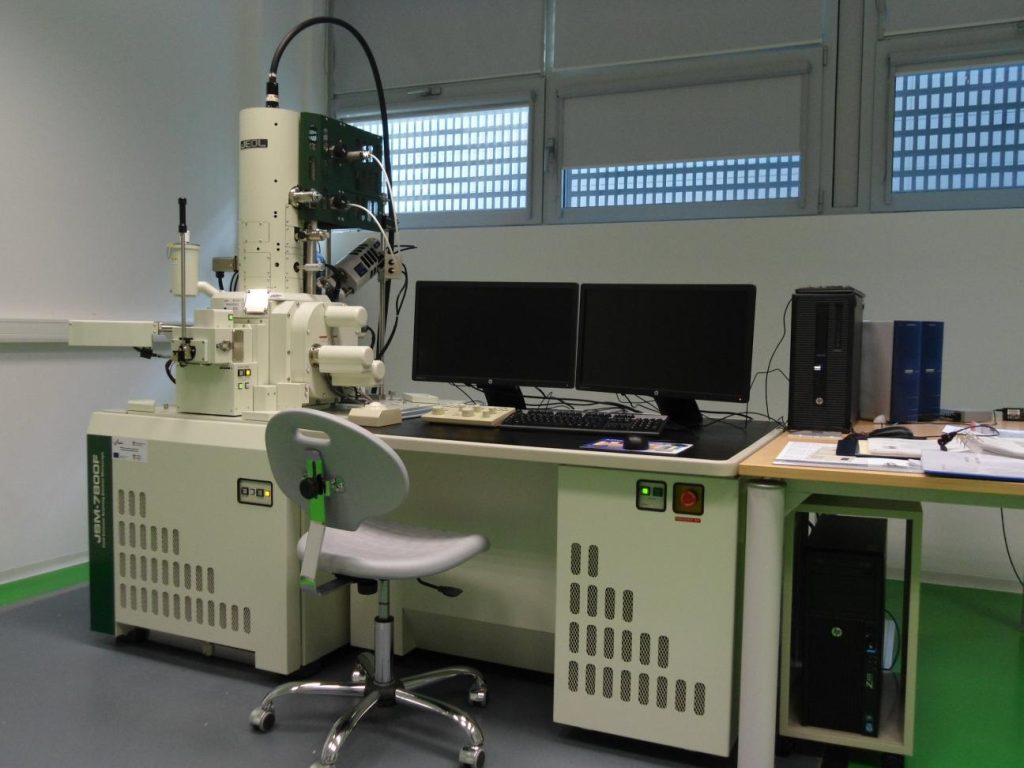
The scanning electron microscope enables observation and characterization of heterogeneous organic and inorganic materials at the nanometer (nm) and micrometer (μm) scale. The surface or micro-volume to be analyzed is irradiated with a well-focused electron beam to generate an image or to perform elemental analysis of the sample. The interaction of the electron beam with the sample produces secondary electrons (emitted from the sample), backscattered electrons (from the electron beam), and characteristic X-ray radiation emitted from the sample. These signals can be used to examine various sample characteristics such as surface topography, crystallography, chemical composition, etc.
Microscope model: JEOL field emission scanning electron microscope (JSM-7800F) with maximum resolution of 0.8 nm, accelerating voltage range between 0.01 – 30 kV, and magnification range: x25 – 1,000,000.
The microscope is equipped with the following detectors:
- Lower detector for secondary electrons (LED)
- Upper detector for secondary electrons (UED)
- Backscattered electron detector (BED)
- Scanning transmission electron detector (STED)
- Energy-dispersive X-ray spectrometer X-MaxN 80, Oxford Instruments (EDS) – used for elemental composition analysis
Sample Preparation Equipment
(Room: O-119)
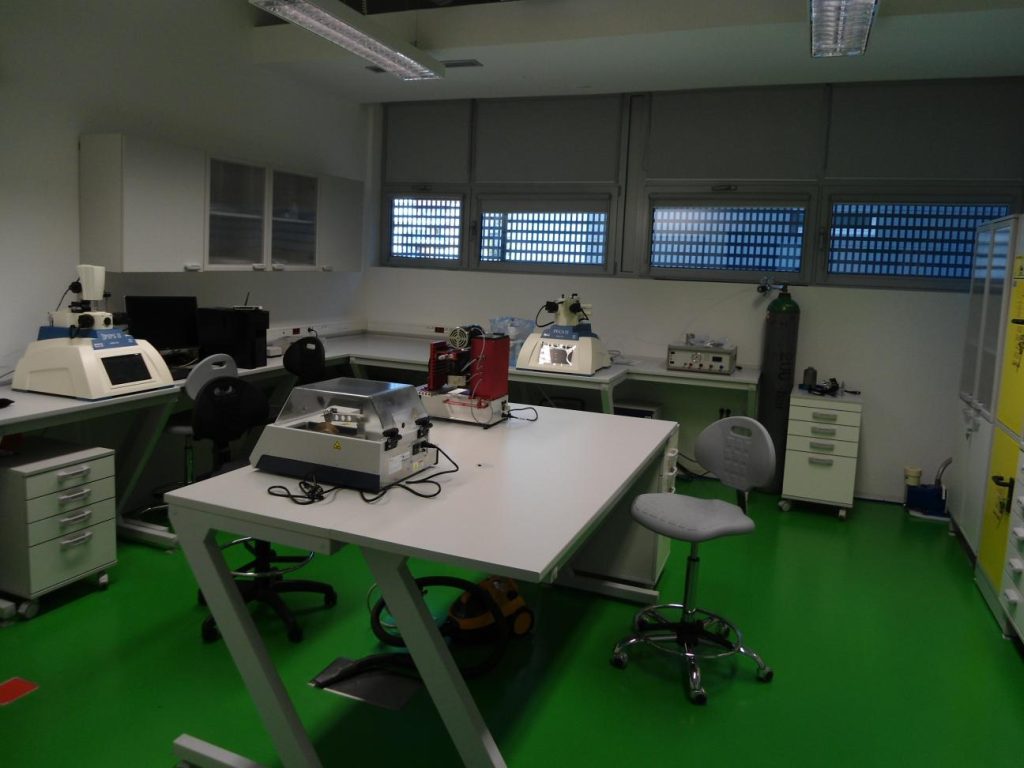
Various precision devices for sample preparation:
- Precision etching and coating system (Gatan PECS II Model 685) – equipped with two ion guns for etching solid samples with low-energy Ar+ ions (energy range 0.1 – 8 keV). It can also be used for sample coating with C, Au, Pt/Pd, Cr, and Pt.
- Precision ion polishing system (Gatan PIPS II Model 695) – equipped with two ion guns for polishing solid samples with low-energy Ar+ ions (energy range 0.1 – 8 keV). Primarily used for preparing samples for scanning transmission electron microscopy (STEM).
- Critical point dryer (Quorum K 850) – used for dehydration of biological samples (replacing water with liquid CO2).
- Precision diamond wire saw (Well 3242) – stainless steel wire with diamond particles is used for cutting different types of samples, producing smooth and sharp edges.
- Precision diamond disc saw (Buehler Iomet 1000) – used for cutting various materials (metals, glass, ceramics, plastics, biomaterials) with minimal deformation.
- Disc Grinder – used for thinning samples.
- Dimple Grinder – used for thinning samples to electron transparency, suitable for STEM/TEM analysis.
Research
Research topics include:
- Investigation of the morphology and thickness of various semiconducting or insulating films obtained by atomic layer deposition
- Diatoms or silica algae (freshwater and marine)
- Desert dust
- Microplastics
- Bacteria
- Orthodontic samples
- Aerosols
- and many others.
Examples of SEM analyses
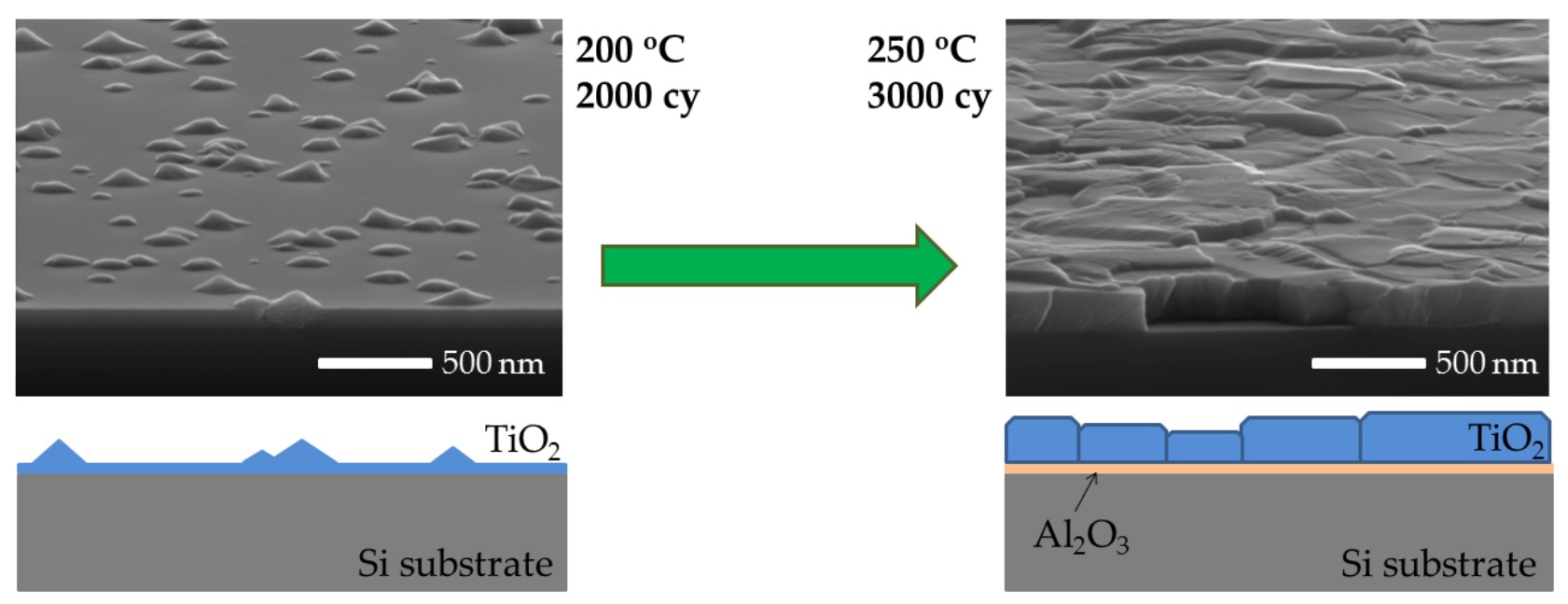
Titanium dioxide (TiO₂) has a wide range of applications in photocatalysis – it is used for water and air purification, as a coating layer for biomedical materials, etc. The possibility of controlling the grain size of anatase-phase TiO₂ films grown on different substrates has been investigated. The crystallinity and size of TiO₂ crystals depend on the film deposition temperature, the number of ALD cycles (i.e., TiO₂ film thickness), the type of substrate, and the thickness of the Al₂O₃ interlayer.
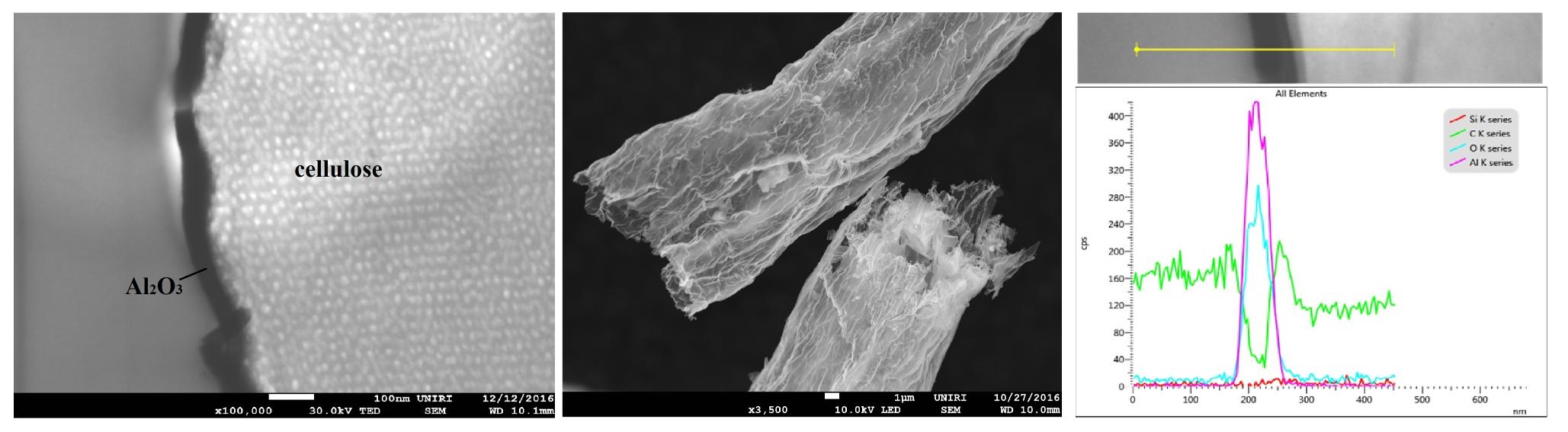
Thin layers of Al₂O₃ films on the surface of cellulose materials prevent oxygen diffusion and spontaneous ignition of cellulose at elevated temperatures. For this purpose, we studied the properties of protective thin Al₂O₃ films grown by atomic layer deposition on the surface of cellulose. Film thickness uniformity and film thickness were determined using a scanning electron microscope in transmission mode (STEM).
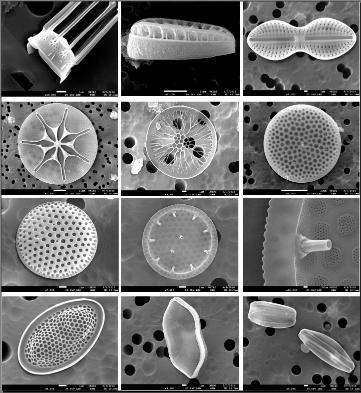
The cell wall of diatoms is composed of silicon dioxide, known as the frustule. Each cell consists of an upper and a lower half, connected laterally by the pleura. There are about 100,000 diatom species on Earth, classified into 250 genera. They differ in the shape of the frustule, size, as well as the form and distribution of surface details on the cell walls. Using a scanning electron microscope, we studied diatoms from Croatian lakes and rivers, as well as from the Adriatic Sea.
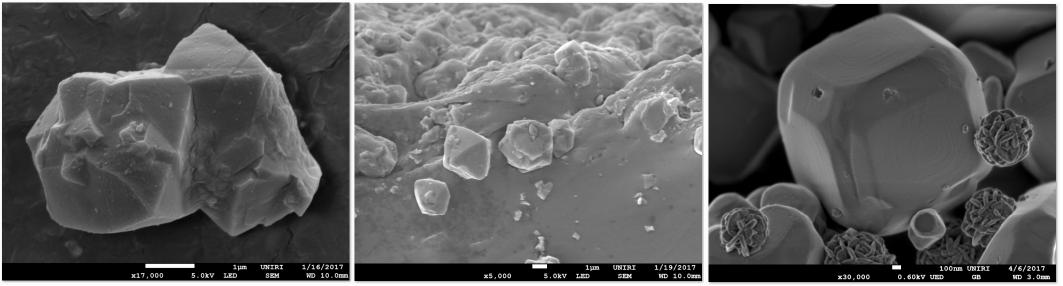
Zeolite materials attract attention due to their unique properties, such as large surface area, well-defined channel systems, and controlled density of active sites. Using a scanning electron microscope, we studied synthetic zeolites as well as zeolites embedded in polymer materials.
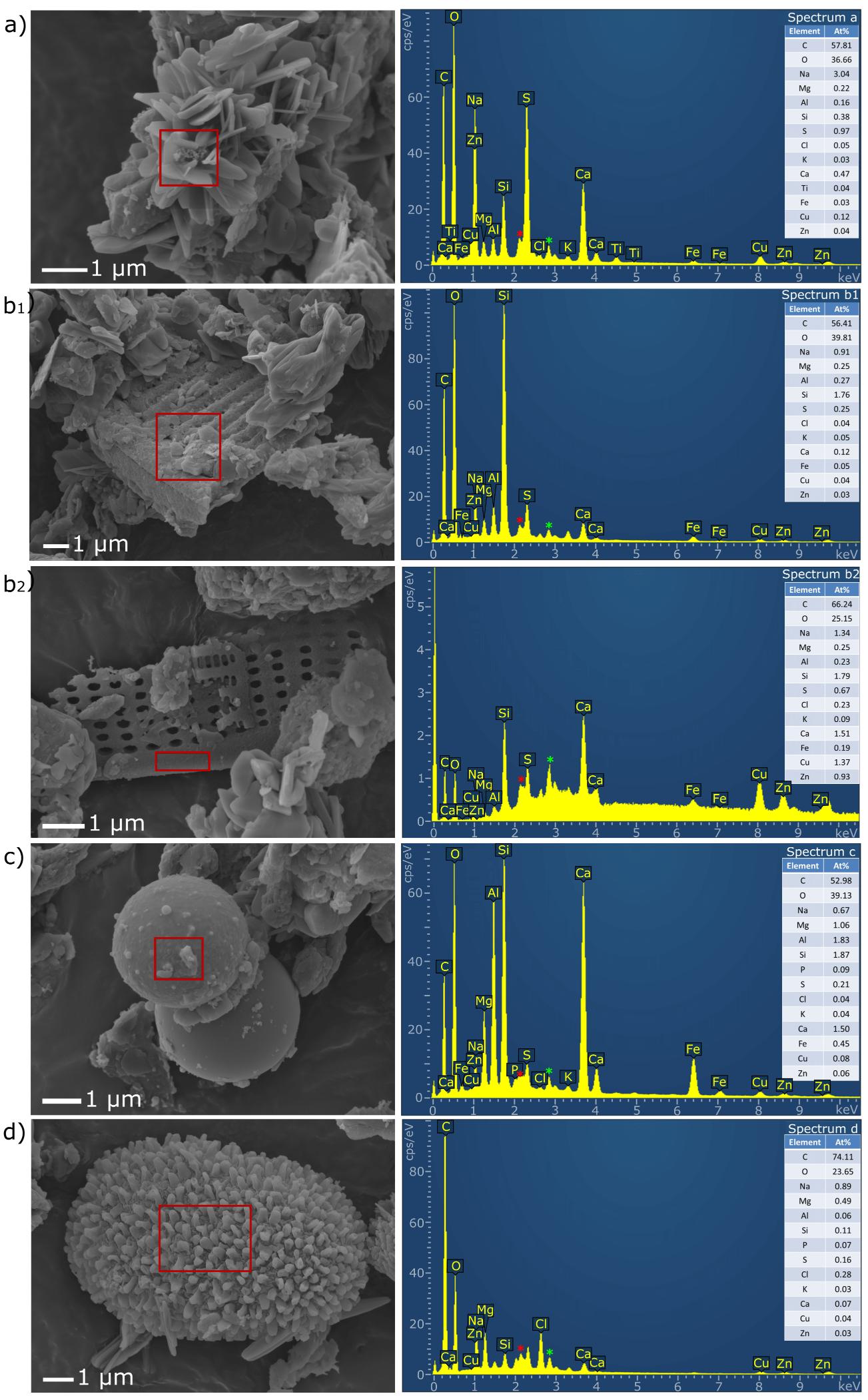
In March 2020, the Balkan region experienced “dirty rain,” characterized by a high concentration of airborne particles. An interdisciplinary study was conducted (Mifka et al., 2023), which included WRF-Chem model simulations, synoptic analysis, morphological and chemical characterization, and particle analysis using a scanning electron microscope. Representative SEM images and EDS spectra revealed: (a) glauberite Na₂Ca(SO₄)₂ and/or CaSO₄ × 2H₂O desert roses typical of North Africa; (b1/b2) fragments of diatom skeletons mixed with dust; (c) aluminosilicates with embedded Fe; (d) primary biological aerosol particles (PBAPs).
Selected scientific publications
- I. Kavre Piltaver, A. Vilfan, G. Kostevc, S. Kralj, D. Babič, Magnetic field directed assembly of magnetic non-spherical microparticles, Journal of physics Condensed matter 36 225101-225110 (2024)
- I. Kavre Piltaver, R. Peter, K. Salamon, M. Mičetić, M. Petravic, In Situ X‐ray Photoelectron Spectroscopy Study of Initial Stages of Tungsten Trioxide Reduction by Low-Energy Hydrogen Bombardment, Journal of physical chemistry C 128, 5345-5354 (2024)
- M. Petković Didović, I. Jelovica Badovinac, Ž. Fiket, J. Žigon, M. Rinčić Mlinarić, G. Čanadi Jurešić, Cytotoxicity of Metal Ions Released from NiTi and Stainless Steel Orthodontic Applicances, Part 1: Surface Morphology and Ion Release Variations, Materials, 16, 4156 (2023).
- R. Peter, A. Omerzu, I. Kavre Piltaver, R. Speranza, K. Salamon, M. Podlogar, K. Velican, M. Percic, M. Petravic, Large enhancement of visible light photocatalytic efficiency of ZnO films doped in-situ by copper during atomic layer deposition growth, Ceramics International 49, 35229-35238 (2023).
- B. Mifka, M. Tališman Prtenjak, I. Kavre Piltaver, D. Mekterović, J. Kruzmić, M. Marcius, I. Ciglenečki, Intense desert dust event in the northern Adriatic (March 2020); insights from the numerical model application and chemical characterization results, Earth Space Sci.,10 e2023EA002879 (2023).
- R. Markoska, R. Stojković, M. Filipović, M. Jurin, V. Špada, I. Kavre Piltaver, K. Pavelić, D. Marković, S. Kraljević Pavelić, Study of zeolite clinoptilolite D-glucose adsorption properties in vitro and in vivo, Chemico-biological interactions, 382, 110641-110652 (2023).
- G. Begić, M. Petković Didović, S. Lučić Blagojević, I. Jelovica Badovinac, J. Žigon, M. Perčić, O. Cvijanović Peloza, I. Gobin, Adhesion of oral bacteria to commercial d-PTFE membranes: Polymer microstructure makes a difference, International journal of molecular sciences, 23, 2983 (2022).
- M. Sigler Zekanović, G. Begić, S. Mežnarić, I. Jelovica Badovinac, R. Krištof, D. Tomić Linšak, I. Gobin, Effect of UV Light and Sodium Hypochlorite on Formation and Destruction of Pseudomonas fluorescens Biofilm in Vitro, Publications MDPI, 10, 1901 (2022).
- N. Novosel, D. R. Gongora, Z. Jagličić, E. Tafra, M. Basletić, A. Hamzić, T. Klaser, Ž. Skoko, K. Salamon, I. Kavre Piltaver, M. Petravić, B. Korin-Hamzić, S. Tomić, B. P. Gorshunov, T. Zhang, T. Ivek, M. Čulo, Grain-Size Induced Collapse of Variable Range Hopping and Promotion of Ferromagnetism in Manganite La0.5Ca0.5MnO3, Crystals, 12, 724 (2022).
- G. Ondrašek, I. Jelovica Badovinac, R. Peter, M. Petravić, J. Macan, Z. Rengel, Humates and Chlorides Synergistically Increase Cd Phytoaccumulation in Strawberry Fruits, Heightening Health Risk from Cd in Human Diet, Exposure and Health, 14, 393–410 (2022).
- S. Mežnarić, I. Jelovica Badovinac, I. Šarić, R. Peter, M. Kolympadi Markovic, G. Ambrožić, Ivana Gobin, Superior UVA-photocatalytic antibacterial activity of a double-layer ZnO/Al2O3 thin film grown on cellulose by atomic layer deposition (ALD), J. Environ. Chem. Eng., 10, 108095 (2022).
- I. Šarić, M. Kolympadi Markovic, R. Peter, P. Linić, K. Wittine, I. Kavre Piltaver, I. Jelovica Badovinac, D. Marković, M. Knez, G. Ambrožić, In-situ multi-step pulsed vapor phase surface functionalization of zirconia nanoparticles via copper-free click chemistry, Appl. Surf. Sci, 539, 148254, 10 (2021).
- A. Omerzu, R. Peter, D. Jardas, I. Turel, K. Salamon, M. Podlogar, D. Vengust, I. Jelovica Badovinac, I. Kavre Piltaver, M. Petravic, Large enhancement of photocatalytic activity in ZnO thin films grown by plasma-enhanced atomic layer deposition, Surfaces and Interfaces, 23, 100984 (2021).
- H. Otmančić, M. Ivanko, D. Pop Acev, E. Kamenar, I. Jelovica Badovinac, S. Šapalj, Corrosion of dental alloys used for mini implants in simulated oral environment, International journal of electrochemical science, 16, 21085 (2021).
- M. Malenica, M. Vukomanović, M. Kurtjak, V. Masciotti, S. dal Zilio, S. Greco, M. Lazzarino, V. Krušić, M. Perčić, I. Jelovica Badovinac et al. Perspectives of Microscopy Methods for Morphology Characterization of Extracellular Vesicles from Human Biofluids, Biomedicine, 9, 603 (2021).
- G. Ondrašek, F. Kranjčec, L. Filipović, V. Filipović, M. Bubalo Kovačić, I. Jelovica Badovinac, R. Peter, M. Petravić, J. Macan, Z. Rengel, Biomass bottom ash & dolomite similarly ameliorate an acidic low-nutrient soil, improve phytonutrition and growth, but increase Cd accumulation in radish, Sci. Total Environ. 753, 141902 (2021).
- G. Ambrožić, M. Kolympadi Markovic, R. Peter, I. Kavre Piltaver, I. Jelovica Badovinac, Duško Čakara, D. Marković, M. Knez, Building organosilica hybrid nanohemispheres via thiol-ene click reaction on alumina thin films deposited by atomic layer deposition (ALD), J. Colloid Interface Sci. 560 (2020).
- M. K. Markovic, R. Peter, I. Jelovica Badovinac, I. Sarić, M. Perčić, R. Radičić, D. Marković, M. Knez, G. Ambrožić, ‘Sandwich’-like hybrid ZnO thin filmsproduced by a combination of atomic layer deposition and wet-chemistry using a mercapto silane as single organic precursor, Nanotechnology 31,185603 (2020).
- R. Peter, K. Salamon, A. Omerzu, J. Grenzer, I. Jelovica Badovinac, I. Šarić, M. Petravić, Role of Hydrogen-Related Defects in Photocatalytic Activity of ZnO Films Grown by Atomic Layer Deposition, J. Phys. Chem. C 124, 8861–8868 (2020).
- I. Jelovica Badovinac, R. Peter, A. Omerzu, K. Salamon, I. Šarić, A. Samaržija, M. Perčić, I. Kavre Piltaver, G. Ambrožić, M. Petravić, Grain size effect on photocatalytic activity of TiO2 thin films grown by atomic layer deposition, Thin Solid Films 709, 138215 (2020).
- I. Jelovica Badovinac, I. Kavre Piltaver, R. Peter, I. Šarić, M. Petravić, Formation of oxides on CoCrMo surfaces at room temperature: An XPS study, Appl.Surf.Sci. 471, 475 (2019).
- I. Šarić, R. Peter, M.K. Markovic, I.Jelovica Badovinac, C. Rogero, M. Ilyn, M. Knez, G. Ambrožić, Introducing the concept of pulsed vapor phase copper-free surface click-chemistry using the ALD technique, Chem. Commun. 55, 3109-3112 (2019).
- M. Vrankić, A. Šarić, S. Bosnar, D. Pajić, J. Dragović, A. Altomare, A. Falcicchio, J. Popović, M. Jurić, M. Petravić, I. Jelovica Badovinac, G. Dražić, Magnetic oxygen stored in quasi-1D form within BaAl2O4 lattice, SciRep, 9, 15158 (2019).
- A. Omerzu, I. Šarić, I. Kavre Piltaver, M.Petravić, T. Kapun, J. Zuleb, S. Stifter, K. Salamon, Prevention of spontaneous combustion of cellulose with a thin protective Al2O3 coating formed by atomic layer deposition, Surf.Coat.Techn. 333, 81 (2018).
- I. Šarić, R. Peter, I. Kavre Piltaver, I. Jelovica Badovinac, K. Salamon, M.Petravić, Residual chlorine in TiO2 films grown at low temperatures by plasma enhanced atomic layer deposition, Thin Solid Films 628, 142 (2017).
- I. Kavre Piltaver, R. Peter, I. Šarić, K. Salamon, I. Jelovica Badovinac, K. Koshmak, S. Nannarone, I. Delač Marion, M.Petravić, Controlling the grain size of polycrystalline TiO2 films grown by atomic layer deposition, Appl. Surf. Sci. 419, 564 (2017).
- R. Peter, I. Šarić, I. Kavre Piltaver, I. Jelovica Badovinac, M.Petravić, Oxide formation on chromium metal surfaces by low-energy oxygen implantation at room temperature, Thin Solid Films 636, 225 (2017).
- R. Peter, I. Šarić, M.Petravić, Enhanced Oxidation of Nickel at Room Temperature by Low-energy Oxygen Implantation, Croat. Chem. Acta 90, 2 (2017).
- I. Kavre Piltaver, I. Jelovica Badovinac, R. Peter, I. Šarić, M.Petravić, Modification of molybdenum surface by low-energy oxygen implantation at room temperature, Appl. Surf. Sc. 425, 416 (2017).
Projects
The field emission scanning electron microscope JEOL JSM-7800F, along with its accompanying sample preparation equipment, has been used over the past seven years in a total of 11 HRZZ projects, two projects co-financed by the European Regional Development Fund, one project co-financed by the European Agricultural Fund for Rural Development, and one project funded by the European Union – NextGenerationEU.
The most significant projects for us are:
- Enhancing the International Visibility of the Rijeka Scanning Electron Microscopy Laboratory, €742,822.70, 1.11.2023 – 30.6.2026, funded by the European Union – NextGenerationEU, project code NPOO.C3.2.R2-I1.06.0083, Principal Investigator: I. Kavre Piltaver, collaborators: Daria Jardas Babić
- Preparation of Porous Thin-Film Materials for Water Purification Using Atomic Layer Deposition (ALD), HRK 977,486.00, 10.4.2017 – 4.9.2021, HRZZ, project code IP-2016-06-3568, Principal Investigator: Assoc. Prof. Gabriela Ambrožić, collaborators: I. Kavre Piltaver, I. Jelovica Badovinac, I. Šarić Janković, R. Peter, and others
- Synthesis of Advanced Nanoparticles and Their Applications in Photocatalysis and Textile Materials, HRK 2,090,486.00, 1.10.2019 – 30.9.2022, HRZZ, project code PZS-2019-02-5276, Principal Investigator: Assist. Prof. Nikša Krstulović
- Comparison of Bone Tissue Repair Response Using Dentin, Xenogeneic Biomaterial, and Autologous Bone, HRK 1,078,400.00, 22.2.2021 – 21.2.2025, HRZZ, project code IP-2020-02-7875, Principal Investigator: Prof. Olga Cvijanović Peloza, MD
- Environmental Factors and Microbiological Interactions in the Structure of Dental Biofilm, HRK 1,494,000.00, 22.2.2021 – 21.2.2025, HRZZ, project code IP-2020-02-4027, Principal Investigator: Prof. Stjepan Špalj, MD, PhD
- Microbiome of the Loggerhead Sea Turtle (Caretta caretta): Insight into Epizoic and Endozooic Communities, HRK 2,305,640.00, 1.3.2018 – 28.2.2023, HRZZ, project code UIP-2017-05-5635, Principal Investigator: Assoc. Prof. Sunčica Bosak
Collaborations with Other Institutions
The field emission scanning electron microscope JEOL JSM-7800F is actively used by the following faculties and scientific-research centers at the University of Rijeka: Faculty of Physics, Faculty of Biotechnology and Drug Development, Faculty of Engineering, Faculty of Medicine, Faculty of Dental Medicine, Faculty of Civil Engineering, Center for Micro- and Nanosciences and Technologies, and the Center for Artificial Intelligence and Cybersecurity.
Additionally, there is a significant number of users across Croatia. Some of them include scientists from the Department of Biology, University of Zagreb (S. Bosak, M. Gligora Udovič), Institute of Physics Zagreb (N. Krstulović, S. Tomić), Faculty of Agriculture, University of Zagreb (G. Ondrašek), Institute for the Adriatic and the Coast, Dubrovnik (A. Car), and others.
These numerous collaborations and the large flow of scientists of various profiles through our laboratory contribute to the development of new ideas and result in joint work within new projects. The FE-SEM also plays a major role in the education of young researchers. Almost all graduate students who have used SEM in their thesis work have gone on to work within the scientific system in Croatia and abroad while maintaining collaborations with us (V. Sršan, V. Kisiček, R. Radičić, Š. Mandić, S. Ražnjević, …). Furthermore, Scanning Electron Microscopy is a course in our PhD program in Physics through which other young researchers are introduced to the SEM laboratory.
The scanning electron microscope has also been used for many years in the course Overview of Forensic Scientific Disciplines, which is part of the Postgraduate Specialist Study in Criminal Investigation.
PhD Candidates and Bachelor’s/Master’s Theses Resulting from Equipment Use
The SEM instrument is regularly used for preparing theses at the Faculty of Physics. It is also employed in the preparation of doctoral dissertations at the Faculty of Physics, the Faculty of Engineering in Rijeka, and the Faculty of Science, University of Zagreb.
In the past five years, three doctoral dissertations have been defended:
- Boris Mifka, Atmospheric Characteristics during the Transport of Saharan Dust over the Adriatic, PhD dissertation, Faculty of Science, University of Zagreb, 2023.
- Marko Perčić, Characterization of Influential Parameters on Nanoscale Friction, PhD dissertation, Faculty of Engineering, 2020.
- Marija Čargonja, Elemental Analysis of Airborne Particles and Biological Samples of Workers in Metal Processing Workshops, PhD dissertation, Faculty of Science, University of Zagreb, 2020.
In addition to these doctoral dissertations, several notable bachelor’s/master’s theses are highlighted:
- Antonio Borzatti, Modification of Titanium Dioxide Thin Films Grown by Atomic Layer Deposition, Bachelor’s thesis, Faculty of Physics, Rijeka, 2023.
- Renato Speranza, Photocatalytic Properties of Copper-Doped Zinc Oxide Thin Films, Bachelor’s thesis, Faculty of Physics, Rijeka, 2022.
- Vinko Sršan, Optimization of the Electronic Structure of Titanium Dioxide Thin Films Grown by Atomic Layer Deposition for Photocatalytic Applications, Bachelor’s thesis, Faculty of Physics, 2021.
- Vanja Baričević, Optimization of Protocols for Visualization of Extracellular Vesicles from Cerebrospinal Fluid of Patients with Severe Brain Injury Using Scanning Electron Microscopy, Bachelor’s thesis, Department of Biotechnology, 2021.
- Rafaela Radičić, Photocatalytic Properties of Zinc Oxide Prepared by Thermal Decomposition of a Cellulose Template, Bachelor’s thesis, Faculty of Physics, 2020.
- Virna Kisiček, Photocatalytic Properties of Zinc Oxide Thin Films Grown on Porous Structures by Atomic Layer Deposition, Bachelor’s thesis, Faculty of Physics, 2019.